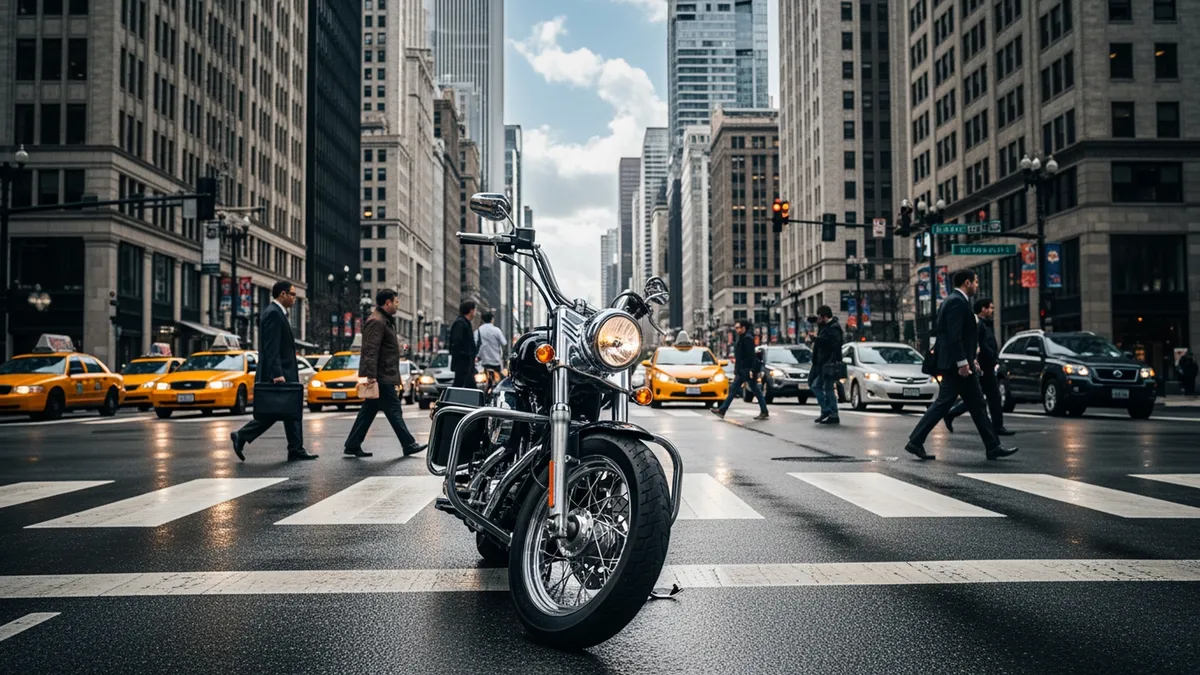
Distracted Driving in Illinois: The Laws That Protect Chicago Riders
You are stopped at a light on Milwaukee Avenue, you glance in your mirror, and the driver rolling up behind you is looking down at their lap instead of the road. On a bike, that split second is the whole ballgame. There is no crumple zone and no steel cage, just you. The good news is that Illinois has some of the stronger distracted-driving laws in the country, and when a driver breaks them and hits you, that violation can become powerful evidence in your injury claim.
What Illinois Law Says About Phones Behind the Wheel
Illinois has a hands-free driving law. As it currently stands, holding and using a handheld cell phone while driving is prohibited. No texting, no scrolling, no holding the phone to your ear. Drivers are generally allowed to use a phone only in hands-free mode, through a Bluetooth connection or a mounted, voice-activated setup. The rules get stricter for certain drivers and situations, and there are limited exceptions such as reporting an emergency. A violation that causes a crash with injuries can carry much heavier consequences than a simple ticket. What matters for you as a rider is the principle: in Illinois, a driver staring at a screen instead of the road is breaking the law.
Why Distracted Drivers Are So Deadly for Motorcyclists
Cars hitting cars is bad. Cars hitting motorcycles is a different category of danger entirely, and distraction makes it worse in ways that hit riders specifically.
- ✓ You are already hard to see. A motorcycle presents a narrow profile. A driver scanning the road might miss you even when they are trying. A driver looking at a phone has no chance.
- ✓ Reaction time is everything. A distracted driver who looks up half a second late does not brake, does not swerve, and does none of the things that turn a near-miss into a non-event.
- ✓ Left turns and lane changes. Most car-versus-motorcycle crashes happen when a driver turns across your path or merges into you. Those are exactly the maneuvers where a distracted driver never saw the bike.
- ✓ Chicago traffic rewards bad habits. Stop-and-go on the Kennedy or the Dan Ryan tempts drivers to sneak a look at their phone, right where you are filtering through or sitting exposed at a light.
How a Citation and Phone Records Prove Fault
If the responding officer cites the other driver for a hands-free violation, that citation becomes an important piece of evidence. It is an official finding, made at the scene, that the driver was doing something illegal. Even without a citation, the driver's own phone can tell the story. Cell phone records, including call logs, text timestamps, and sometimes app-usage data, can show whether the phone was in use at the moment of impact. In a serious injury case, your attorney can pursue those records through the legal process. Pair the timestamps with the crash time from the police report, and a "the sun was in my eyes" defense falls apart fast. Witness statements, nearby traffic and doorbell cameras, and the driver's own admission at the scene all stack on top.
How This Fits With Illinois' Comparative Negligence Rule
Illinois uses a modified comparative negligence system, the 50% Rule. Your compensation gets reduced by your share of the fault, and if you are found more than 50% at fault, you recover nothing (735 ILCS 5/2-1116). Proving the other driver was distracted does two jobs. First, it stacks fault onto them. A driver who was illegally using a phone will have a hard time convincing anyone the crash was mostly your fault. Second, it pushes back on the insurance company's favorite move, which is shifting blame onto the rider. Solid proof of distraction is the difference between a claim reduced by 10% and one gutted by 60% or denied outright.
What to Do After the Crash to Preserve the Evidence
Distraction evidence is perishable. Phone records get overwritten, cameras loop and erase, and the driver's story gets more polished by the day. If you are hurt, your health comes first, but when you are able, protect the proof. Call the police and make sure any distraction you saw goes in the narrative. Note exactly what the driver said if they admitted anything. Photograph the vehicles, positions, and the intersection. Get witness names and numbers before anyone leaves. Note nearby business, doorbell, and traffic cameras so the footage can be requested before it is deleted. Do not post about the crash and do not chat with the other driver's insurer. The sooner someone moves to preserve phone records and camera footage, the better your odds of nailing the distraction down cold.

Led by Derek Martin, DDT Injury Team in Chicago fights for injured motorcyclists. Reach out to their motorcycle accident lawyers in Chicago anytime you need real answers.